
The Short Answer
Pull the emergency release cord only when the garage door is fully closed and you need to open it by hand because the opener has lost power or stopped working. Pulling it while the door is open, in motion, or when a spring is broken can let a 150-to-400-pound door drop fast, jump its track, or jam at an angle you can't move. If you're not sure why the door stopped working, don't pull the cord until you've looked at the door itself first.
What the Cord Actually Does
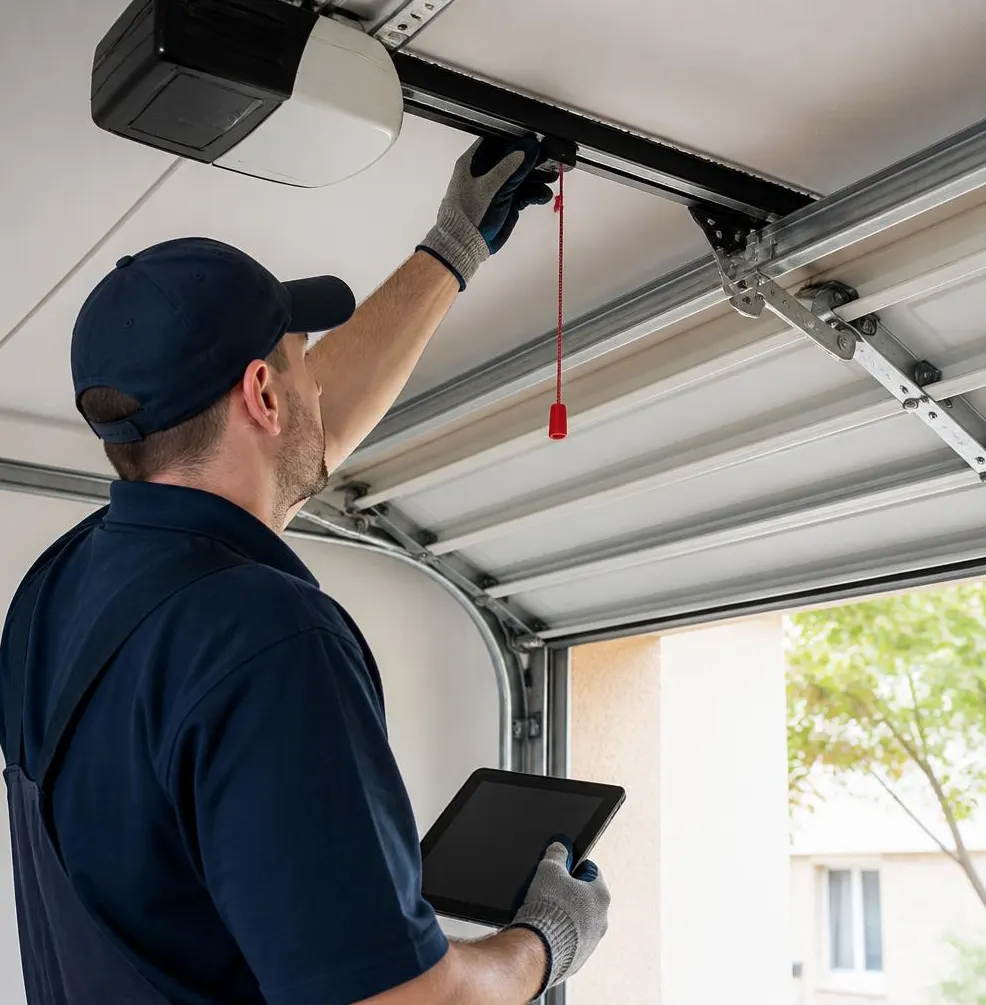
That dangling red handle is connected to a release arm on the trolley — the piece that rides along the opener's rail and pulls the door up and down. Pulling it disconnects the trolley from the drive mechanism, which lets you raise and lower the door manually, the way garage doors worked before openers existed. It's a safety feature required on every residential opener, built so you're never permanently locked in or out if the motor fails.
When Pulling It Is the Right Move
- Power outage during a storm. Thonotosassa sees plenty of outages when summer and hurricane-season storms roll through. If the door is closed and you need to get the car out, the release cord is exactly what it's for.
- Opener motor failure. If the opener hums, clicks, or does nothing at all but the door itself moves freely by hand, disconnecting lets you operate the door manually until the opener is repaired.
- Stuck remote or control panel. A dead battery or fried circuit board shouldn't leave your car trapped inside.
When Pulling It Makes Things Worse
- The door is open overhead. Torsion springs hold the full weight of an open door. Disconnect the trolley while it's up there and nothing is left to control the descent — it can free-fall onto anything or anyone underneath.
- A spring is already broken. A loud bang from the garage, a door that looks lopsided, or a door that won't budge more than a few inches are signs of a broken spring. Without it, the door is simply too heavy to lift safely by hand, release cord or not.
- The door is already off track. If a panel is visibly crooked or the rollers have popped out of the track — common after wind-driven debris or a hard impact — releasing the trolley can let the door twist further and damage the panels or the track itself.
- A humid, swollen wood door. Florida humidity makes wood doors swell and bind in their tracks. A door that's dragging will fight you the whole way up, and forcing it can strain the hardware or pull the release arm loose.
Actions That Prevent the Bad Outcomes
- Close the door with the opener before a storm, whenever possible. It's far easier and safer to reconnect and operate manually from a closed position if you lose power mid-storm.
- Test door balance a couple of times a year. Disconnect the opener, lift the door halfway by hand, and let go. A properly balanced door stays put. If it drops or shoots up, the springs need attention before you rely on manual operation.
- Listen for warning signs. A bang, a sagging door, or sudden heaviness means a spring problem — stop and call for repair rather than pulling the cord and forcing it.
- Reconnect the trolley properly afterward. Run the door closed, then pull the cord toward the door (not the opener) to re-engage the carriage. Leaving it disconnected means the opener won't work next time you need it.
- Keep moving parts lubricated. Salt-laden air and constant humidity push rust onto springs, hinges, and rollers faster here than in drier climates. A light silicone-based lubricant twice a year keeps the manual mechanism moving smoothly when you need it most.
When to Call Thonotosassa Garage Door Experts
If you've pulled the release cord and the door won't move, feels dangerously heavy, or comes off track, stop and call us rather than forcing it further. We handle Garage Door Spring Repair for doors that have gone unbalanced or snapped a spring, and Off Track Door Repair when a door has jumped its rail during manual or storm-related stress. We'll also check the whole system during a Garage Door Maintenance & Tune-Up so the release mechanism, springs, and rollers are ready before the next outage, not during one.
If your garage door isn't behaving the way it should, give Thonotosassa Garage Door Experts a call — we serve Thonotosassa, Temple Terrace, Plant City, Seffner, Brandon, Valrico, Dover, and Riverview, and we'll get it moving safely again.