
The Rule of Thumb
If your garage door opener has gotten noticeably louder over the past few months, the cause is almost always loose hardware or dry metal-on-metal contact — not a failing motor. The exceptions are a sudden grinding sound, a door that slams instead of lowering smoothly, or banging that lines up with every rotation of the trolley: those point to a worn gear set, a stripped sprocket, or a chain that's about to jump its track, and they call for a closer look before you touch anything else.
Tools You'll Need
- Socket wrench or ratchet set
- Phillips and flathead screwdrivers
- White lithium grease (not WD-40, which attracts grit)
- A step ladder
- Rubber isolation pads or anti-vibration mounts (sold at hardware stores)
- A flashlight for inspecting rollers and the rail
Skip anything labeled a general-purpose spray lubricant. In our humidity, a thin oil film just mixes with airborne dust and moisture and turns into a gritty paste inside a few weeks.
Step-by-Step: What You Can Do Yourself
- Tighten everything first. Garage doors see constant vibration, and in older Thonotosassa homes the wood framing the track mounts to can swell and shrink with seasonal humidity, loosening lag screws over time. Go bolt by bolt along the rail brackets, the motor unit mounting bolts, and the hinges on the door panels themselves.
- Lubricate the moving metal parts. Apply white lithium grease to the rollers, hinges, the screw or chain drive, and the springs. Wipe off excess so it doesn't drip onto your car or driveway.
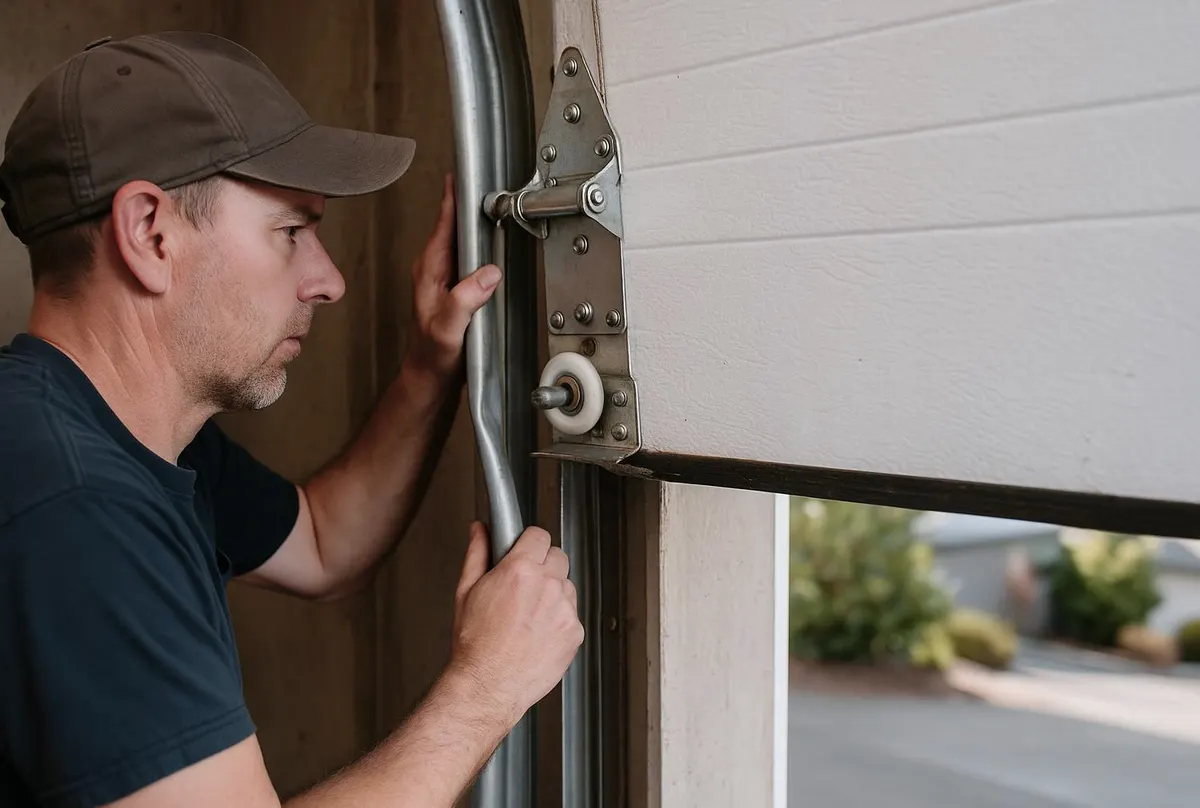
- Check and replace worn rollers. Metal rollers are the loudest option and the first to suffer when humidity gets into the bearings and they start to rust. If yours are metal and more than a few years old, swapping them for nylon rollers with sealed bearings is one of the single biggest noise reductions a homeowner can make in an afternoon.
- Add vibration isolation. Install rubber isolation pads between the motor unit and the ceiling bracket. This alone can cut down the resonant hum that travels into living spaces above or next to the garage.
- Inspect the chain or belt tension. A chain-drive opener with too much slack will slap against the rail with every open and close. Most units have an adjustment nut near the motor head — tighten in small increments and test, aiming for about half an inch of play, no more.
- Look at the weatherstripping and bottom seal. A stiff, cracked seal from UV exposure and heat can cause the door to bang down the last inch instead of settling. Replacing it is inexpensive and also helps keep wind-driven rain out during storm season.
Where to Stop and Call a Technician
Some noise sources involve spring tension or electrical components that aren't safe for DIY work, and attempting them yourself risks injury or voiding a warranty:
- Grinding from the torsion spring area — springs are under extreme tension and should only be serviced by a trained technician.
- A popping or clunking cable drum — frayed or slipping cables need professional cable repair, not a quick fix.
- Gear noise from inside the motor housing — a stripped drive gear means opening the unit, which usually isn't worth doing on a unit more than eight to ten years old.
- A door that's noisy because it's running off track — if the noise started after a storm or a hard impact, don't force the door; off track doors need realignment before anything else is adjusted.
When It's Time for a Belt-Drive Swap
If you've tightened, greased, and replaced rollers and the opener is still loud, the drive mechanism itself may be the problem. Chain-drive openers are durable and affordable, but they're inherently noisier — metal links running over a metal sprocket. A belt-drive opener replaces the chain with a reinforced rubber belt, which runs nearly silent and tends to hold up well in humid garages since there's no metal chain to develop surface rust.
This is a worthwhile upgrade if:
- Your garage shares a wall with a bedroom or living space
- Your current opener is more than ten years old and nearing the end of its service life anyway
- You've noticed rust forming on the chain despite regular lubrication, which is common near Thonotosassa's humid, storm-prone air
Swapping the entire opener unit is a job for a technician — it involves matching horsepower to your door's weight, wiring in safety sensors correctly, and in many cases upgrading to a unit rated for the wind-load standards that matter during hurricane season.
When to Call Thonotosassa Garage Door Experts
If you've worked through the steps above and the door is still loud, grinding, or banging, it's time to call in a technician rather than keep guessing. We handle Garage Door Maintenance & Tune-Up visits that cover full lubrication, hardware tightening, and roller replacement in one trip, and when a cheaper fix won't cut it, we offer Garage Door Opener Installation with quiet, belt-drive units built to handle Florida humidity and wind-load requirements. We'll diagnose whether you're dealing with worn hardware, a failing spring, or a motor on its way out, and give you a straight answer on what's worth fixing versus replacing.
If your garage door in Thonotosassa, Temple Terrace, Plant City, Seffner, Brandon, Valrico, Dover, or Riverview has gotten too loud to ignore, call Thonotosassa Garage Door Experts today for a quiet, reliable fix.